
Exposed aggregate concrete
Exposed Aggregate Concrete vs Stamped Concrete
Last updated
Exposed aggregate suits a stone-texture preference. Stamped concrete suits a brick or stone-like pattern. Wood-like patterns are another option. Choose by the finished texture and coating, suited to the use. Check the sample wet and dry, including furniture or small wheels where relevant. Compare the same slab and base scope. Neither finish promises invisible repairs, automatic water drainage through the surface or a crack-free slab.
Sections9
Exposed aggregate concrete vs stamped concrete compares visible stones with an imprinted pattern. Choose for daily use and appearance. Both finishes need suitable concrete and joints.
Drainage still matters. Compare finished samples before comparing price.
Exposed aggregate concrete vs stamped concrete at a glance
| Decision | Exposed aggregate | Stamped concrete |
|---|---|---|
| Appearance | Stones visible in background paste | Imprinted pattern or texture |
| Selection record | Aggregate source and exposure method | Stamp set and color method |
| Color variation | Stone and paste combination | Base and accent combination |
| Sample check | Stone relief and exposure | Grooves and raised texture |
| Joint plan | Still required | Still required; pattern lines don't replace joints |
| Repair matching | Stone source and paste may differ | Pattern, accent and wear may differ |
Scroll for more →
Use Concrete Network's comparison to distinguish the two finish systems, then compare samples and quotes for the same project scope.
How the two finishes differ
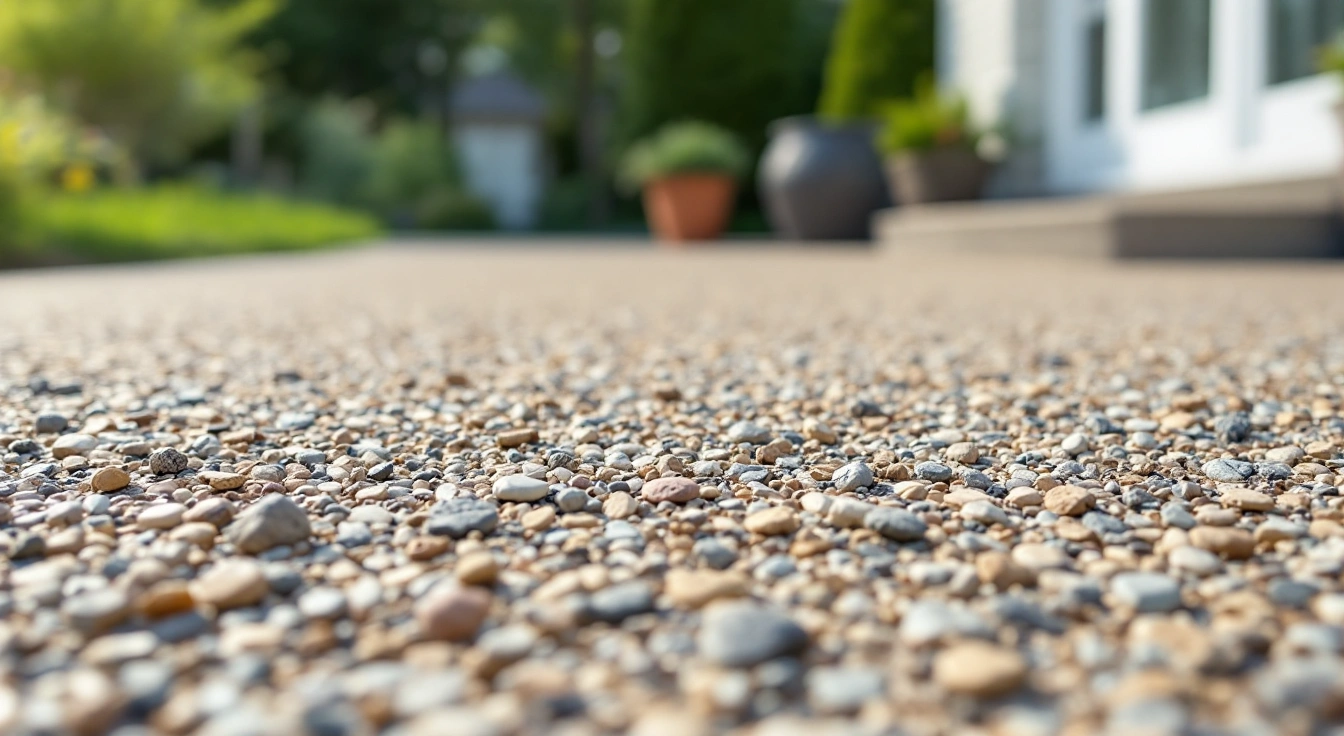
Aggregate exposure removes some of the paste near the surface. Selected stones may be in the mix or seeded into the top. A surface retarder is one method used to control the exposure stage.
The finish is not a layer of loose stones on a hardened slab.
Stamping presses a pattern into fresh concrete. A mat may make apparent stones or boards. A texture skin gives surface texture without fixed apparent units.
Integral color or surface treatments can create the base and accent. The patterned face remains a concrete slab rather than separate masonry.
These different work stages belong in the quote. One price should name aggregate exposure and cleanup. The other should name stamping and coloring.
Include the first coating in both scopes. A bare finish price cannot be compared with a complete coated system.
Texture and wet traction
A pebbled texture can suit walking, but exposure varies. Stamp textures vary too. Neither name creates a universal traction rating.
Inspect the actual surface with its coating. Check the proposed finished sample under the conditions that matter to the site.
A patio dining area adds chair feet and small wheels. Move the proposed furniture over the sample. Deep-looking grooves in a stamp may affect a chair differently from a fine aggregate exposure.
That does not make one finish better for every patio. It helps you reject the wrong version for this use.
For a sloped walk, assess drainage and wet use separately from appearance. Leaves or coating wear can alter the surface in service. Don't select from a dry indoor sample and then assume it settles an outdoor traction concern.
Request product-specific evidence if the decision relies on a traction claim.
Patterns, colors and variation
Aggregate shows stones in the paste. You can choose a restrained or varied palette. Use materials you can actually obtain.
Save the aggregate source and color records. A later shipment can differ, so a surface sample is a reference rather than a promise of identical stones everywhere.
Stamped work can give a layout such as brick rows or stone blocks. Check the stamp repeat and direction inside the measured footprint. The pattern can end awkwardly at a narrow edge.
A border may help, but it adds a detail to the placing and price scope.
Compare stamp and color choices in Solomon Colors' finish overview with the stone choices in the aggregate guide. View either sample with its proposed coating, so gloss and color do not become a late surprise.
Installation and curing
Both finishes need the specified slab and base. Do not let an appearance upgrade displace the concrete specification. Ask how the installer will handle the finish sequence.
Check the joints and curing plan too. The crew has to plan these stages before placing.
NRMCA CIP 6 explains slab joints. A stamped groove is not proof of a contraction joint. An aggregate field is not exempt from joint details either.
Put the true joint lines on the finish plan and check their appearance at borders.
NRMCA CIP 11, the 2017 curing leaflet, explains the moisture and temperature needs of concrete. Surface exposure and stamping don't replace curing. Choose a curing method that fits the finish system.
Keep traffic release separate from the surface looking dry.
Compare equivalent prices
Use the same footprint and slab plan for both quotes. Use the same base and access assumptions. Then compare the decorative work.
An aggregate price may assume a ready site. A stamped price may include excavation and base work. Those scopes cannot give a fair finish comparison.
An installed package may already include concrete and placing labor. Don't add those again. Ask whether washing or release cleanup is included, and whether the first coating is inside the price.
Removal and disposal also need an explicit status on a replacement project.
The stamped concrete cost guide preserves a national source's finish tiers. It can start a stamped budget. It doesn't prove a fixed price difference from aggregate at your site.
The alternate-scope quote is the useful comparison.
Repairs and future extensions
An aggregate patch must fit the stones and surrounding paste. A stamped patch must fit the texture and color system. Both are affected by age and wear.
Save the installation records, but do not assume a later repair will disappear.
If you expect a future extension, define its boundary now. A contrasting strip can give the later pour a deliberate edge. It still needs a joint detail suited to the slabs.
Color matching alone is not a movement plan.
Access to buried services may also matter. A cut through either slab leaves repair work to finish. If that concern dominates your decision, compare a unit-paving system as a separate complete proposal.
Neither decorative concrete finish gives the same lift-and-replace route as individual paving units.
FAQ: the two finishes
Which finish has better wet traction?
The finish names alone cannot settle that. Aggregate relief, stamp texture and the proposed coating affect the surface. Check the actual finished samples wet and dry.
Include slope and debris in the use case. Request evidence for a specific traction claim rather than assuming every pebbled or patterned surface behaves the same way.
Is aggregate always cheaper than stamping?
Do not use that as a fixed rule. Stone selection and exposure detail affect aggregate work. Patterns, colors and borders affect stamping.
Access and base preparation may dominate either project. Compare complete proposals using the same footprint and slab requirements. The price difference should come from defined work rather than a general finish ranking.
Can the finishes be used together?
They can be combined in a designed project, such as an aggregate field with a stamped border. Define the boundary and finish sequence before pricing. Both parts still need the actual slab joints and curing plan.
The combined design can add stages, so it should not be treated as one unspecified decorative allowance.
Do visible stones make the slab permeable?
No. Exposed aggregate and pervious concrete describe different surface systems. Seeing stones does not prove that water will pass through interconnected voids.
Keep the drainage route on the project plan. If permeability is required, use evidence for the exact proposed pavement and base rather than a photograph of an exposed finish.
Verdict on exposed aggregate concrete vs stamped concrete
For exposed aggregate concrete vs stamped concrete, decide from the use case and finished sample. Choose visible stones for that texture, or stamping for a defined pattern. Keep the slab scope equal when pricing. Record care and repair limits before turning a preferred photo into the final project specification.