
Driveway material comparisons
Best Driveway Material
Last updated
Choose a driveway material from the site's needs rather than a universal ranking. Poured concrete, asphalt and pavers each need a suitable supporting system. Loose aggregate has a different care and edge scope. Compare matched installation quotes with future access and maintenance in view. A decorative finish or a permeable label adds another decision. Keep drainage and local street requirements clear before choosing from price alone.
Sections18
- Best driveway material by site and priority
- Record the actual use
- Poured concrete
- Asphalt
- Interlocking concrete pavers
- Loose aggregate and other surfaces
- Initial installed price
- New work versus replacement
- Grade and the water route
- Purpose-designed permeable pavement
- Climate and opening instructions
- Maintenance and long-term budget
- Future cuts and repair appearance
- Four practical shortlists
- Check a mixed-surface option
- Compare the same work
- FAQ
- Verdict on the best driveway material
The best driveway material is the one that suits the site and how you use it. Start with vehicle access and the water route. Then compare complete installed scopes for the surfaces you like.
Best driveway material by site and priority
There is no single winner for every property. An open site with simple access differs from a narrow lot with a difficult garage contact. The best shortlist starts with those facts.
| Main priority | Option worth comparing | What to check before choosing |
|---|---|---|
| A plain continuous paved field | Poured concrete or asphalt | Full support scope and surface care |
| A decorative unit pattern | Interlocking pavers | Unit suitability and restrained edges |
| A patterned poured surface | Stamped concrete | Approved sample and real joint layout |
| Future local utility access | Pavers alongside defined slab or asphalt repairs | Actual lifting and restoration method |
| Water management through pavement | Purpose-designed permeable system | Site drainage design and approval |
| A loose surface | Graded aggregate system | Containment, upkeep and walking use |
Scroll for more →
The table directs a comparison. It does not certify a material for your loads or declare one surface safest in every condition. Each option still needs a clear scope.
The concrete driveway guide covers a concrete project in more detail. This guide helps decide whether that route fits the priorities before you spend time choosing its finish.
Record the actual use
List the vehicles that normally use the driveway. Include any occasional heavier service or delivery load that the pavement must carry. Mark where wheels turn near an edge.
Draw the parking positions and open-door zones. Add the route people use to reach the entrance. That walking space may be the reason to change the layout even when the garage access works well.
Think about seasonal use. Snow storage or leaf buildup can affect available space. A surface sample viewed in dry summer weather cannot answer every winter-care question.
If someone uses a mobility aid, describe the actual route and needs. Ask the designer to consider the surface and its contacts. Do not infer a traction or access rating from a rough texture alone.
Keep a measured version of the plan. The dimensions guide helps separate parking size from useful access space. It does not set a legal width for every property.
Poured concrete
Poured concrete forms a slab from fresh concrete placed on site. Its surface can be plain or decorative. The slab and supporting system need to suit the planned use.
Concrete is not cement powder alone. The American Cement Association explains the cement-based paste that binds aggregates. Read cement vs concrete driveway when a quote uses the informal word “cement.”
For a plain surface, ask about the actual finish and coating scope. For decorative work, approve a sample with the proposed products. A glossy display sample may not show the surface you want outdoors.
Keep the mix requirements with the order. NRMCA CIP 31 explains job-specific concrete needs. A high strength number alone does not choose slab thickness or the ground preparation.
Concrete joints are part of the work. NRMCA CIP 6 explains their functions. Show them alongside any decorative pattern rather than assume stamp grooves perform the same role.
This route is worth comparing when you want a continuous field and a clearly defined finish. Keep possible future cuts in view. A repair or replaced panel may remain visible next to older concrete.
Asphalt
Asphalt pavement uses an aggregate mixture bound with asphalt binder. It is placed and compacted under its required work method. It has a different material and construction process from poured concrete.
The NAPA paving handbook explains the mixture and compaction process. It does not establish one suitable residential section for every site. Ask the quote to state the mix and supporting layers.
Asphalt may suit a preference for a dark continuous field. Price the complete installation and ask for its care instructions. A sealcoating proposal is separate from proof that the original pavement has suitable support.
For existing work, distinguish an overlay from a full rebuild. Keeping old pavement can be a different scope from removing it. Ask how the proposal addresses any settlement or drainage problem.
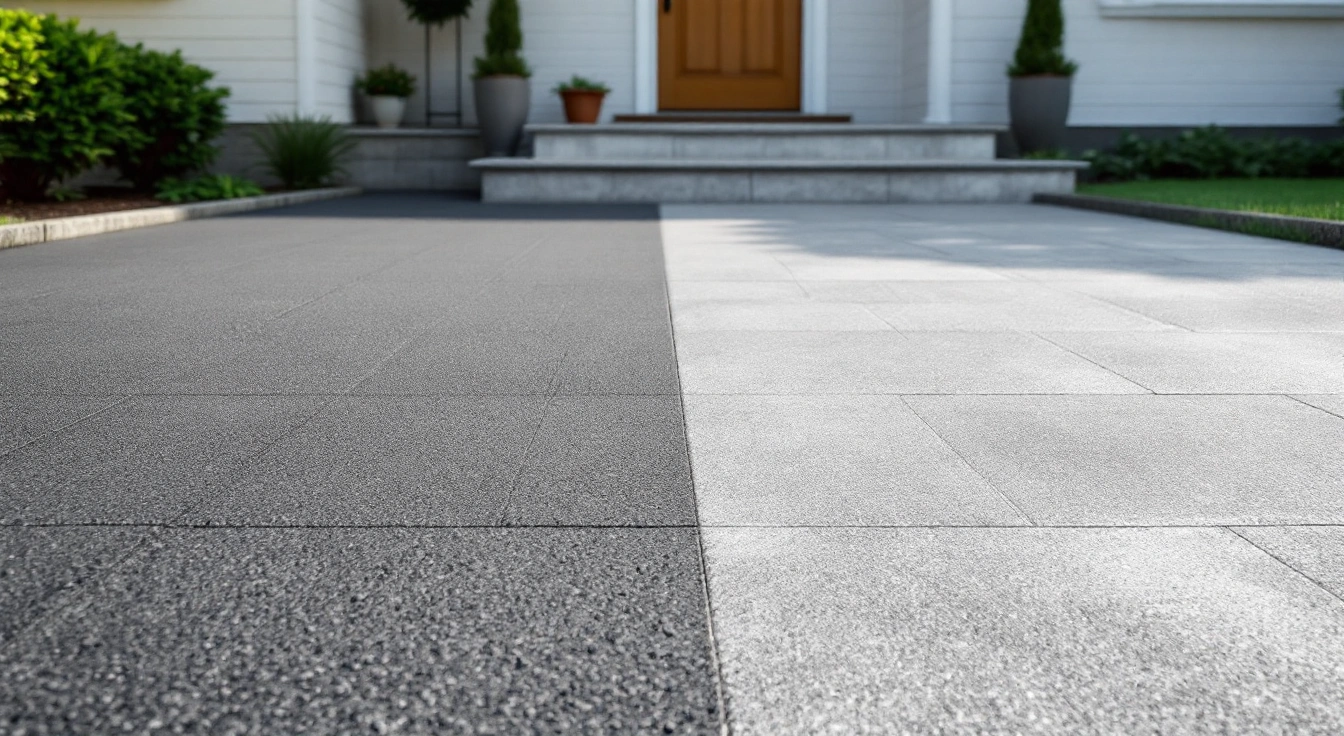
Use asphalt vs concrete driveway for the direct comparison. Get matched quotes before choosing from a broad statement about which surface is cheaper.
Interlocking concrete pavers
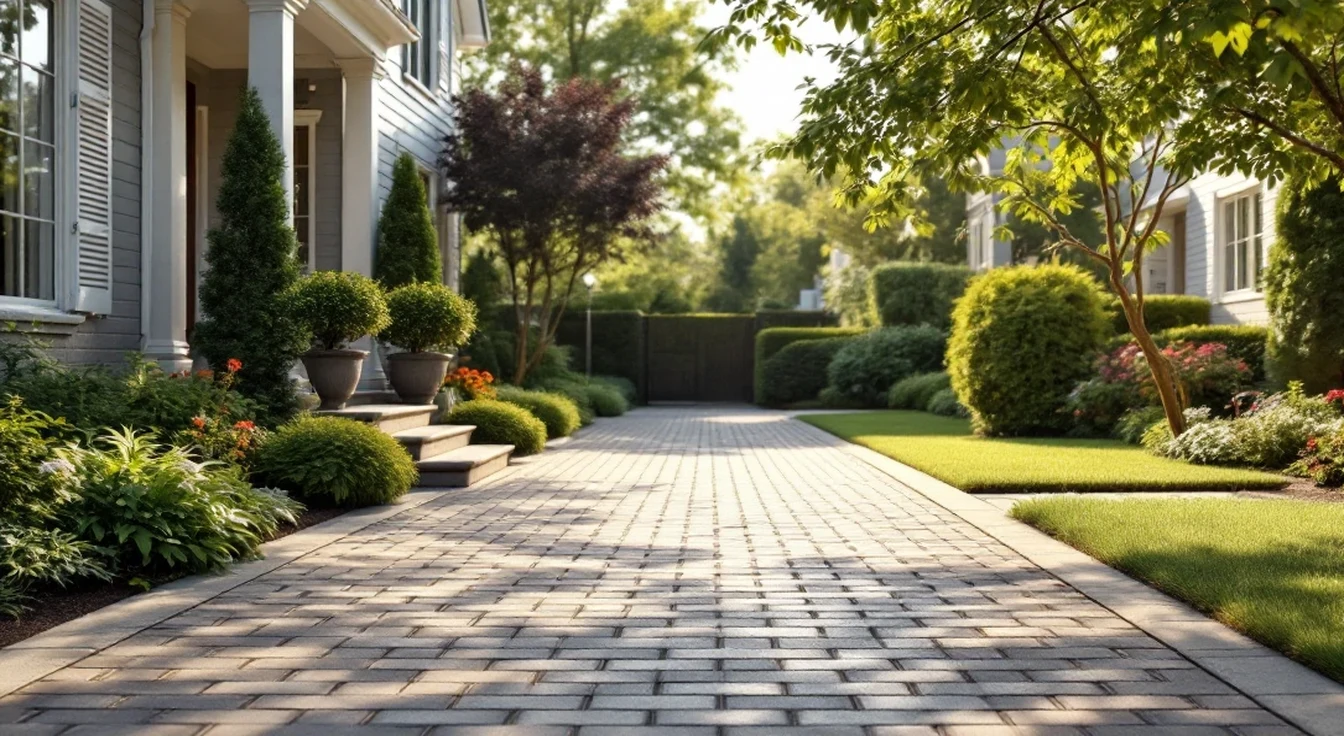
Pavers create a surface from separate units. Their laying pattern is one part of a supporting pavement system. Concrete pavers are concrete products, even though they differ from a poured slab.
CMHA's construction bulletin covers the support and bedding layers for interlocking concrete paving. The actual section should match the site and loads. A unit's appearance does not approve the whole driveway.
Ask about the edge restraints and how they are built. CMHA's restraint guidance explains the role of the perimeter in keeping the pavement interlocked. A garden edge shown in a rendering is not enough detail.
Unit lifting can help later local access. It still needs a method for restoring the support and joints. Keep the product record and any spare-unit plan, while recognizing that weathered old units may look different from new ones.
Read pavers vs concrete driveway before comparing a paver quote with a poured slab. The relevant comparison is complete installed systems, not equal top-layer thickness.
Loose aggregate and other surfaces
A loose aggregate surface has different containment and care needs from a bound pavement. Ask how the edges will keep material in the intended area. Check the grade and the expected maintenance method.
Include the walking route in the decision. Small wheels and footwear can interact with loose material differently from a firm field. Discuss the actual users rather than assume that a low initial allowance makes it the best fit.
Confirm local rules at the street contact. The acceptable entrance detail can differ from the private area behind it. A loose-surface proposal should show both scopes where they meet.
For brick or natural stone units, identify the exact paving product and system. Wall brick and a paving unit are not interchangeable just because they look alike. Ask for the product's approved use and the complete support method.
This guide does not rank named products or invent a price for an undefined system. Obtain a dated quote for the actual material and site. Keep unknown costs visible until the work is described.
Initial installed price
These national references cover different published categories. Use them to frame a budget, then obtain bids that cover the same work before comparing totals.
| Reference | Published installed range | Date |
|---|---|---|
| Concrete Network, plain concrete driveway | $5 to $8 per sq ft | January 13, 2026 |
| HomeGuide, standard concrete driveway | $6 to $10 per sq ft | June 3, 2025 |
| HomeGuide, asphalt driveway | $5 to $12+ per sq ft | May 28, 2025 |
| HomeGuide, broad paver driveway category | $10 to $30 per sq ft | January 6, 2026 |
Scroll for more →
Sources: Concrete Network, HomeGuide concrete, HomeGuide asphalt and HomeGuide pavers. Keep each category beside its rate.
For a 600-square-foot area, rate multiplication gives planning allowances of $3,000 to $4,800 for the first plain-concrete reference. The standard-concrete reference gives $3,600 to $6,000. The asphalt reference gives $3,000 to $7,200+, and the broad paver reference gives $6,000 to $18,000.
Those totals are calculated from the stated area. They do not confirm demolition or unusual site work. Do not use them to prove a local price difference without matched inclusions.
The concrete estimator gives editable concrete rates and priced extras. It does not calculate an asphalt mix order or choose a paver system. Keep alternative quotes beside the concrete worksheet rather than force them into a concrete volume formula.
New work versus replacement
An empty prepared site differs from an old driveway that needs removal. Mark the old surface and the proposed new footprint separately. A wider design may add new ground work beyond the demolition area.
Ask how disposal is priced. Some removal rates include it. Adding another waste allowance to that same scope would count it twice.
After old pavement is removed, the support may need more work. Record what preparation is included and how extra work would be measured. A low surface rate cannot resolve that unknown by itself.
The replacement cost guide shows a concrete example with separate removal and installation lines. Use the same scope discipline when comparing another material. An overlay should remain a distinct option from full replacement.
Grade and the water route
Show where rainwater leaves the driveway. Include the garage contact and any low point. Surface style should follow that plan rather than obscure it.
Ordinary concrete or asphalt paving is not assumed permeable here. Ordinary paver joints are not proof of a permeable system either. Ask for the actual water-management design when that function is part of the brief.
Check any street apron or public sidewalk crossing with the responsible authority. These contacts may require a different detail from the private driveway field. Keep approvals and inspections in the scope before selecting a material.
Use the driveway slope worksheet to record rise over run. A percentage is a geometry result. It cannot approve the outlet or choose a suitable pavement from the number alone.
Purpose-designed permeable pavement
A permeable option is a complete system, not only a surface label. It may include open-graded layers and a defined water route. The site needs an assessment for how the water will be handled.
CMHA's permeable pavement guidance describes construction for permeable interlocking concrete paving. It differs from ordinary sand-bedded paving. Ask the designer to name the proposed system and maintain that distinction in the quote.
Keep the maintenance method too. A system planned to pass water through its surface needs care suited to that function. Do not assume ordinary cleaning advice applies to every permeable design.
Avoid counting a claimed drainage saving before the drainage scope is priced. A proposal may reduce some separate work, but that depends on the site and approvals. Compare the complete alternatives with the same water-management goal.
Climate and opening instructions
State the exposure each pavement must face. Concrete mix needs differ with service conditions. Asphalt construction and compaction have their own requirements.
Ask what weather would stop the planned work. The schedule should leave room to follow the required method. A discounted installation date is not useful if the conditions do not suit the process.
Get written opening instructions for the actual surface and intended loads. Concrete curing is not the same as surface drying. NRMCA CIP 11 explains moisture and temperature control during curing.
Keep household access in the plan for all options. A unit pavement still needs its supporting work completed and accepted. This guide does not give an automatic opening date based only on the material name.
Maintenance and long-term budget
Ask each proposal to name the care it expects. Keep the actual coating or joint product instructions. Avoid treating every concrete or paver surface as though it uses the same cleaner and renewal method.
Track changing cracks and unevenness. Record new ponding as well. A repair should address its cause rather than only change the visible surface.
Price known future work when a clear scope is available. Keep uncertain intervals explicit. A guessed annual coating bill is not a verified life-cycle cost.
Do not promise that a material pays for itself through resale. This site has no property-specific valuation evidence. Choose from the complete budget and the useful service you expect, while keeping resale claims out of the arithmetic.
Future cuts and repair appearance
Mark any likely utility route before choosing a surface. Ask how a trench would be opened and restored. The appearance after that work can matter as much as initial pattern choice.
Pavers may allow unit lifting. The base and joints still need proper reinstatement. A poured slab may need a cut and defined panel or patch work.
Asphalt patches have their own scope and appearance. None of these routes promises an invisible repair after weathering. Keep samples and product records, but do not confuse a record with a match guarantee.
If future access is likely, compare a restoration allowance based on an actual route. Do not declare all pavers cheaper to repair without a scope. A small service opening and a broad support failure are different jobs.
Four practical shortlists
A plain driveway with a tight initial budget
Start with standard asphalt and plain concrete bids for the same measured field. Give bidders the same removal and access facts. Check the included base work before comparing totals.
If a bid leaves important work unknown, request a defined allowance or quote. Choose after the gaps are visible. The smaller headline rate may still be a reasonable option, but its scope needs to be understood.
A decorative entrance with moderate care needs
Compare an all-decorative surface with a plain field and limited accent. Approve samples beside the home. Keep the real joint or edge system on the drawing.
Measure the accent rather than let a photo determine its size. Ask for the coating and care plan. This keeps the visual choice connected to the work you will own.
A site with future utility access
Compare paver lifting with defined cuts through the continuous surfaces. Show a likely opening on the plan. Ask what support restoration each option would need.
Keep the product and as-built records for the selected system. A repair method is useful only when it restores the needed pavement function. Appearance expectations should be stated separately.
A site where runoff is the main issue
Start with the water-management goal and applicable site rules. Compare a purpose-designed permeable system with a complete graded-and-drained alternative. Do not select from the surface label alone.
Price the complete systems, including their care. Keep any unknown ground conditions explicit. Choose the material after the drainage scope works.
The surface cannot replace that plan.
Check a mixed-surface option
A plan can use more than one surface. For example, a homeowner may want a plain field with a unit-paved entry. That is a design option to price, not a completed job or a promised saving.
Mark the boundary of each system. Ask how their levels meet and how the edge will be held. Keep the water route across that contact clear.
Check which crew handles the contact. If separate bids cover the two areas, record any gap between them. A neat line on a drawing does not assign the work to either bidder.
Compare the mixed option with a single-system quote for the same whole footprint. Include added edges and small-scope charges. Do not subtract one published area rate from another and assume that difference is the actual saving.
Keep care records for both surfaces. A cleaner suitable for one area may not suit the adjoining finish. Ask how maintenance can be done without disturbing joint material or another coating.
This comparison is useful when the visual goal is limited to the entrance. It can also reveal that one system is simpler for the full site. Let the measured scope and actual quotes decide.
Compare the same work
Published prices help frame a budget, while NRMCA, NAPA and CMHA guidance addresses technical questions within each body's scope. Neither replaces a quote for the same surface, base and site work.
This guide does not select a universal pavement section, assign a safety score or guarantee service life. Local site design and approvals remain project-specific.
FAQ
What is the best driveway material overall?
There is no universal winner. Start with the loads and water route, then compare complete installed systems. Concrete, asphalt and pavers can meet different priorities when properly specified.
Keep future access and care in the decision. A material name cannot choose the right support work. It cannot prove the lowest full budget either.
Which driveway material is cheapest?
Get comparable local quotes for the actual site. Published ranges help start planning, but they use different categories and inclusions. Removal or drainage work may change either total.
A loose surface also has a different care scope from a bound pavement, so choose from the complete job rather than an isolated material rate.
Are pavers better where drainage matters?
Only a defined water-management design can answer that for the site. Ordinary pavers are not automatically permeable. A purpose-designed permeable system has its own joints and supporting layers.
Compare it with a complete drainage alternative and check local requirements. The visible gap between units is not proof of approved drainage performance.
Can I choose from expected lifespan alone?
No. Broad lifespan figures cannot predict a particular driveway's failure year. The work quality and actual conditions matter.
Compare the installed scope and future care, keeping uncertain timing visible. A warranty is a separate promise with its own terms; it should not be substituted for a verified life-cycle budget.
Does a decorative finish make a stronger driveway?
A pattern or color does not prove load capacity. The supporting system and pavement detail must suit the intended use. Keep those technical needs in the plan when comparing decorative options.
A higher finish rate may pay for appearance and extra work, without approving a thinner slab or heavier vehicle load.
Verdict on the best driveway material
The best driveway material fits the actual site and household priorities. Compare matched quotes with support and drainage included clearly. Keep future access and care beside the initial price. Choose the surface after those facts are known, then retain the sample and work records for later maintenance.
Plan the next part of your project
Asphalt vs Concrete Driveway
Compare asphalt and concrete driveway scope, upkeep, repair and dated cost ranges for the same site and vehicle use.
Read the guide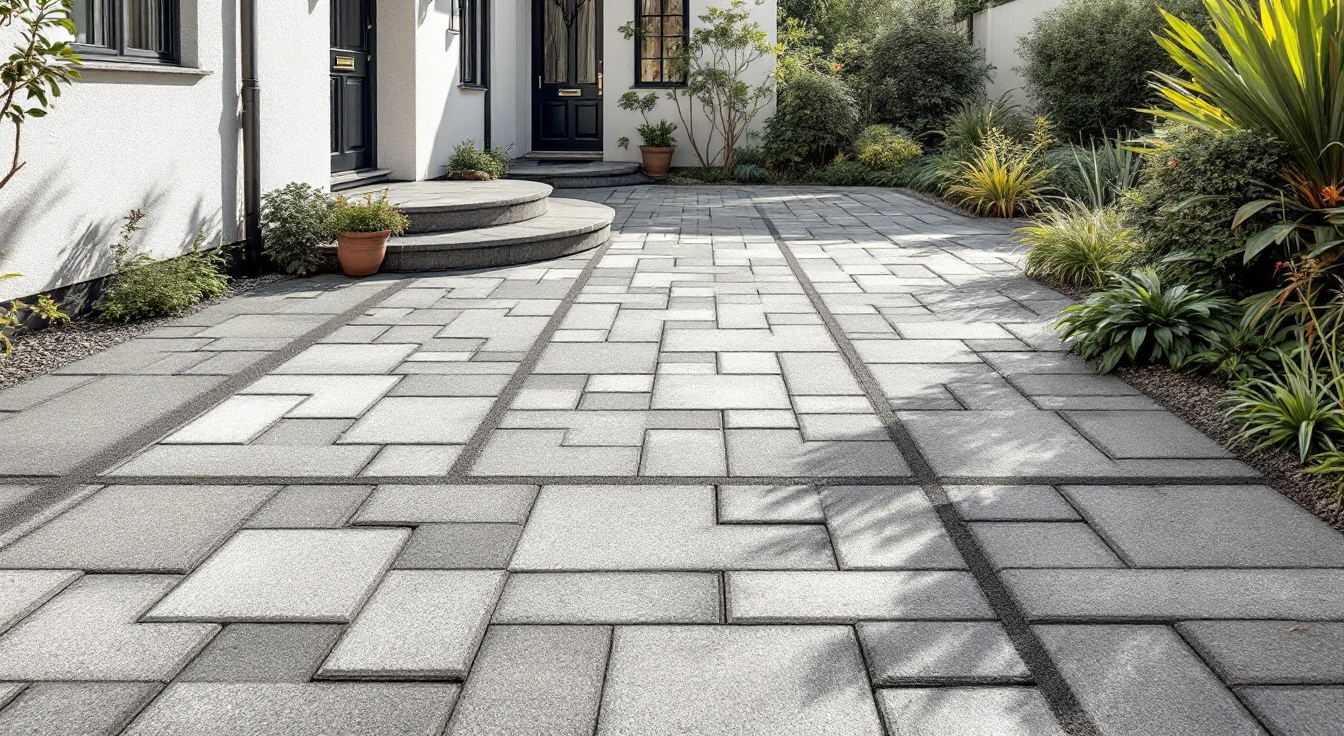
Cement vs Concrete Driveway
Understand cement versus concrete driveway terminology and compare quotes for the same slab, base, finish and installation scope.
Read the guide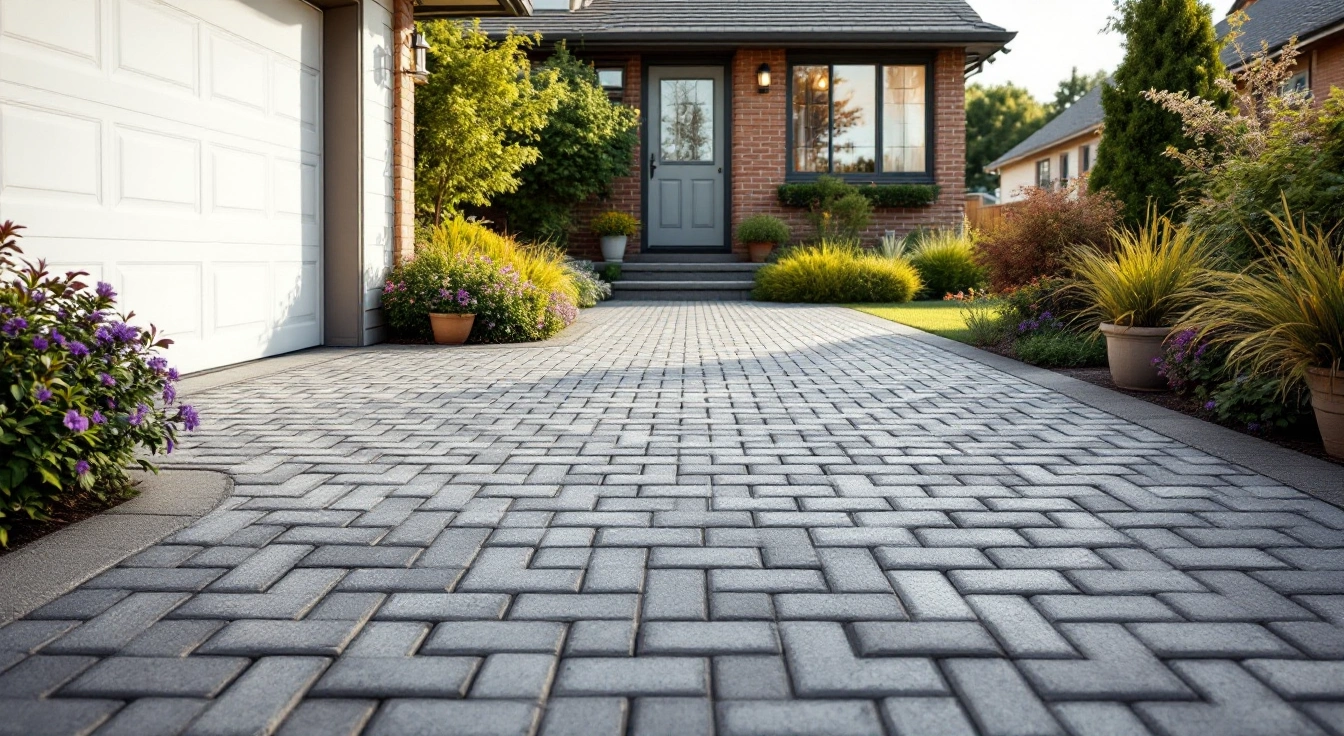
Pavers vs Concrete Driveway
Compare pavers and poured concrete for driveway support, installation, joints, repair access, upkeep and complete project scope.
Read the guide