Exposed aggregate concrete
Exposed Aggregate Concrete
Last updated
Choose exposed aggregate concrete from a finished sample using the proposed stones and exposure method. The surface can range from fine texture to more obvious pebbles. Check it under shoes and furniture. Try small wheels where relevant. Color comes from both the stones and the paste around them. Keep drainage and joints in the slab plan. Retain its curing plan and finish care instructions.
Sections11
- What exposed aggregate concrete means
- Stone size and surface texture
- How the surface is exposed
- Color and background paste
- Uses, borders and transitions
- Joints and curing still matter
- Maintenance and repair appearance
- Define the installed scope
- Finish inspection record
- FAQ: exposed aggregate
- Verdict on exposed aggregate concrete
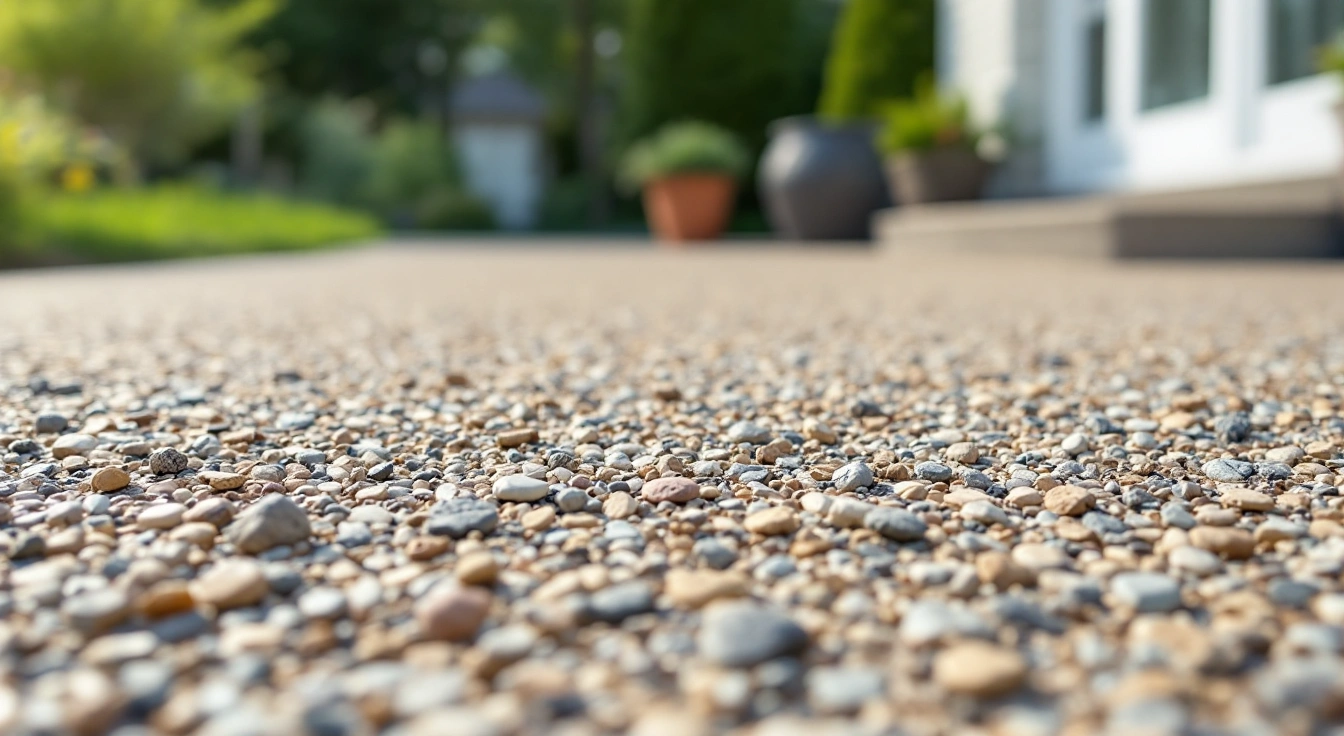
Exposed aggregate concrete has stones visible at the surface. The finish removes some surface cement paste while leaving the aggregate held in the slab. It can suit a driveway or walk, but stone choice and exposure need to fit the actual use.
A close-up photo can't settle the whole design.
What exposed aggregate concrete means
Concrete contains aggregate within the mix. In an exposed finish, part of that aggregate becomes visible rather than remaining below a paste-covered face. A seeded finish adds selected stones at the top.
Other designs use aggregate already in the mix. Ask which approach the quote includes.
The April 22, 2020 Concrete Network aggregate overview describes the finish. Its appearance does not establish the slab's load capacity: different slab designs can carry the same surface treatment.
It is different from a layer of loose gravel. The exposed stones remain held in concrete. Pervious concrete is a different system.
It passes water through connected gaps. An exposed finish does not prove that those gaps exist. Visible stones do not prove that water will drain through the slab.
Stone size and surface texture
Stone size affects the visible pattern and how the surface feels. A fine exposure has a different use from a strongly pebbled face. Don't choose from the stone color alone.
Ask to see a finished sample, with the proposed amount of exposure and any coating.
Rounded and angular particles can produce different textures. Use a sample with the actual proposed stones. A photo of a similar mix is not enough.
Availability can vary. If the quoted aggregate must be substituted, check a new sample before assuming the result will look the same.
| Sample question | Why it matters |
|---|---|
| Aggregate source and size | Appearance and texture depend on the selected stones |
| Mixed throughout or seeded | The placing method and finish scope differ |
| Amount of surface exposure | A stone photo alone doesn't show the walking surface |
| Paste color | The background affects the overall color |
| Final coating | Gloss and wet behavior may differ from the bare sample |
Scroll for more →
For a patio, set a chair on the sample and move it. For a walk, check the path of a small wheel or cane tip. These checks help you select the finish.
They are not lab tests of wet traction. A texture you like on a driveway may not fit a dining area.
How the surface is exposed
One exposure method washes the fresh surface at the right stage. Another uses a surface retarder. Hardened surfaces need a different treatment.
A retarder slows setting at the top. That lets the crew remove surface paste later. It does not stop the whole slab from setting.
Compare these approaches in Concrete Network's exposure-method guide, then follow the selected product's instructions. Timing and product choice affect the result.
This overview does not supply a washing recipe for an unknown mix or site.
Ask how runoff and removed paste will be handled. Washing is part of the finish scope, not a reason to let residue enter a storm drain. Check the site rules for disposing of this residue.
Protect nearby surfaces. Put that work in the scope near a house or old paving.
Color and background paste
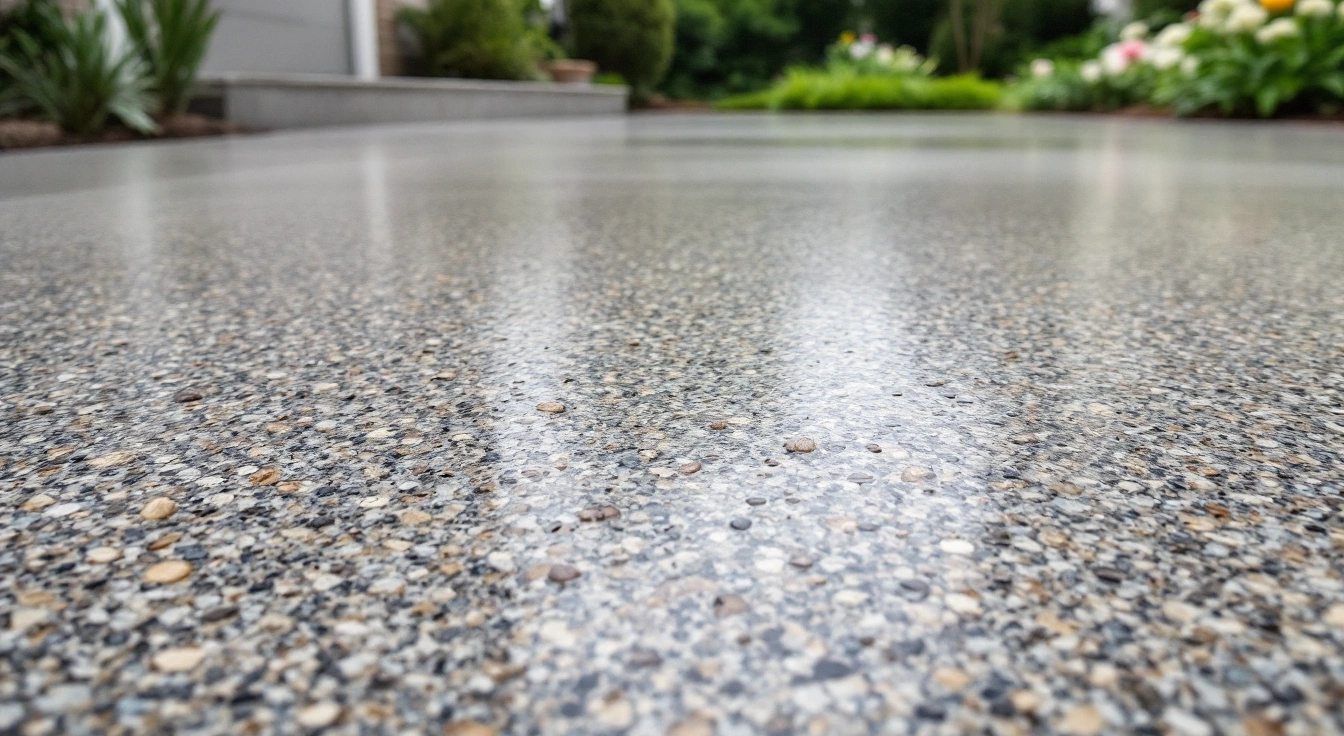
The stones and the paste around them both contribute to the color. A light mix with dark stones can look different from the same stones in a tinted background. Look at the whole sample from normal viewing distance.
A magnified stone image can make the surface seem more varied than it looks from the doorway.
Wetness and sealer may alter the appearance. Compare dry and wet samples beside the house. If the desired effect depends on a coating, put that exact finish in the proposal.
Keep color and gloss as separate decisions.
Natural stones can vary. A sample shows the proposed mix. It cannot set the position of each stone in the slab.
Agree on the allowed variation before placing. That is especially useful when a later extension is likely.
Uses, borders and transitions
An aggregate field can sit beside a plain strip or another decorative finish. A border gives a clear edge and may make a change in texture easier to plan. Define its width and surface rather than asking for a border with no detail.
Price the extra work separately if it isn't included.
Check the height and water route at a threshold. Compare the tread and landing beside a step. For a public walk, confirm the allowed finish with the authority.
A private driveway image does not approve a finish for a public pedestrian route.
The finish comparison helps you compare visible stones with a stamped pattern. Keep both options on the same base and slab scope so the comparison is about the finish rather than two different projects.
Joints and curing still matter
Exposed stones don't replace movement joints. NRMCA CIP 6 describes the purpose of joints in concrete slabs. Put the joint layout on the plan before selecting borders.
A continuous-looking surface still needs the required joint details.
Washing the surface also doesn't complete curing. NRMCA CIP 11, the 2017 leaflet, explains moisture and temperature control. The curing method needs to fit the decorative finish and any later coating.
Record that method rather than treating a visibly dry surface as ready for use.
Vehicle loading is a separate question. The stones cannot tell you the strength in place. Keep the mix and opening-to-traffic conditions in the driveway scope.
A finish guide should not select a universal day on which every driveway can carry a vehicle.
Maintenance and repair appearance
Keep the care instructions for the installed finish. Use the cleaner and pressure limits appropriate to the surface system. Harsh cleaning can harm a finish or coating.
Test the approved method in a small area when the instructions call for it.
Choose a sealer that suits exposed aggregate and prepare the surface for it, as described in the aggregate sealing guide. That guidance does not establish a fixed resealing schedule for every outdoor slab.
A repair can differ in stone source, paste color and wear. Save the original material record. It helps define a repair.
It cannot promise a patch that won't show. If buried services may need later access, include the appearance of a cut-and-repair area in your finish decision.
Define the installed scope
Ask for the measured area, concrete specification and base preparation before pricing the exposure finish. List the stones and method. Identify the sample.
Add joints and curing. Check initial coating and cleanup as named lines rather than assuming they appear in every per-square-foot package.
Removal and difficult access stay separate unless the package explicitly includes them. Permits and tax remain unknown until confirmed. National finish prices can start a budget, but they don't prove that an old slab can be removed or that a backyard placing route is included.
Use the concrete calculator for the specified thickness and measured footprint. It calculates the volume and supply allowance. It does not calculate exposure quality or the cost of correcting a poor surface.
Keep the finish price tied to its own written scope.
Finish inspection record
Before you accept the proposal, also ask how the finished surface will be judged. Keep the sample identifier and the agreed aggregate source with the work record. State whether the sample is dry or wet.
Record whether it is sealed. A mismatch can be hard to discuss later if one person is comparing a wet slab with a dry sample.
Record the limits of any appearance promise. Natural stone variation and later weathering are different from missing stones or an uneven exposure. This guide does not diagnose a defect from a photograph.
The written finish description gives you a clearer basis for documenting what you see and asking for an explanation.
Save a close photo of the accepted sample and a wider photo beside the house. They help record the decision, although they still can't give an exact color reference on every screen. Keep the physical sample where the project agreement calls for one.
FAQ: exposed aggregate
Is exposed aggregate a loose-stone driveway?
No. It is a concrete surface with some stones exposed while still held in the slab. Loose gravel is a different pavement.
The concrete still needs its specified base and joints. Seeing stones at the surface does not prove that it drains water through the slab or that it can carry a particular vehicle load.
Can I choose the stone color alone?
Stone color is only part of the appearance. The paste around the stones and the amount of exposure matter too. A coating can alter the result.
Choose from a finished sample using the proposed materials. Check it from normal viewing distance as well as close up, and compare it beside the house.
Is exposed aggregate always slip resistant?
Do not treat every exposed surface as having the same wet traction. Stone texture and exposure affect the result. The coating matters too.
Water and debris matter too. Inspect the proposed finish and request evidence for any important traction claim. A pebbled photo is not a tested slip rating for your completed surface.
Can a patch match the original finish?
The original aggregate and color records help define a patch, but they cannot guarantee a match. The old surface has worn and its coating may differ. New stones may come from another batch.
Discuss the expected appearance and boundary before pricing a repair so that the result is judged against an honest scope.
Verdict on exposed aggregate concrete
Select exposed aggregate concrete by the finished texture and full slab scope. Approve the stones and background together. Retain the joints and curing plan. Keep the drainage route intact. Compare the stamped finish option if you want a pattern instead of visible aggregate, then price one clearly defined system.