
Driveway material comparisons
Asphalt vs Concrete Driveway
Last updated
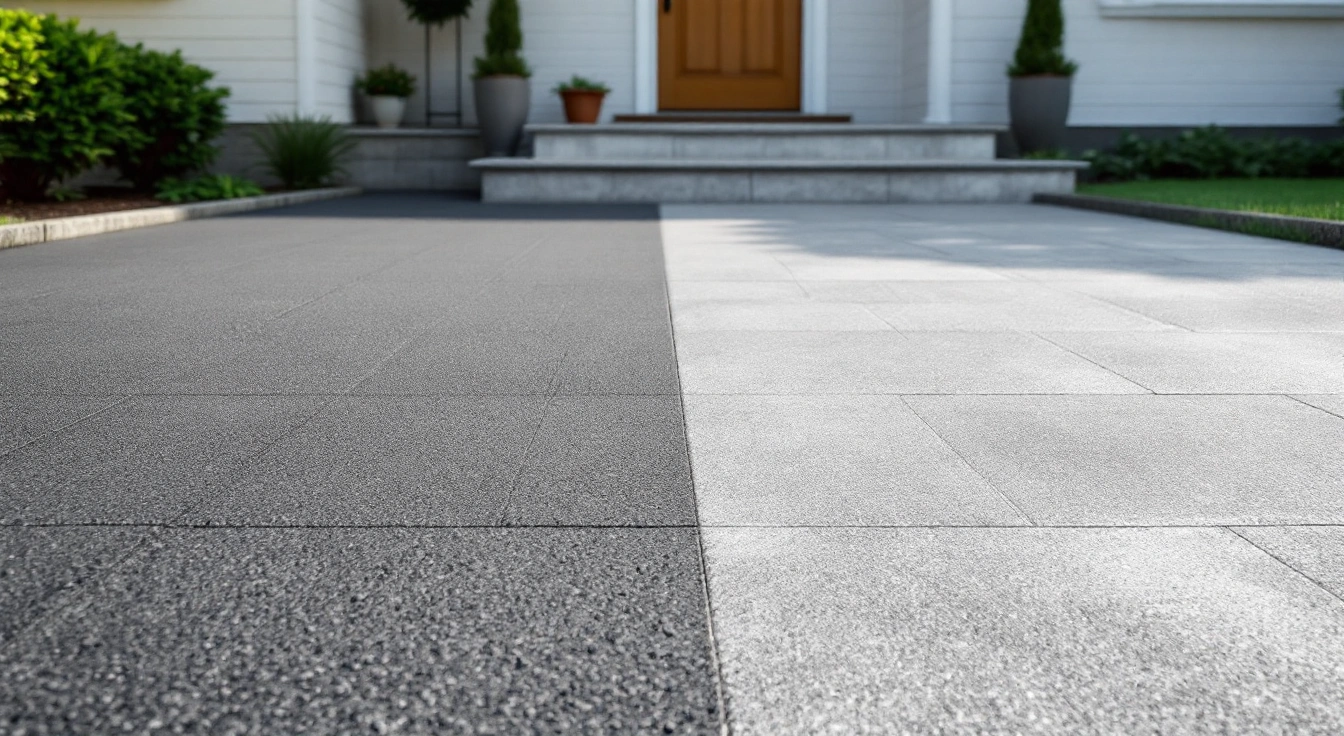
Compare asphalt and concrete for the same measured driveway and vehicle use. Both need a suitable supporting system and a working water route. Dated national price ranges overlap. A local quote can matter more than a broad claim about price. Keep opening instructions and future care with each option. A lifespan figure cannot prove the best choice for every site. A smooth surface photo cannot prove it either.
Sections11
- Asphalt vs concrete driveway decision table
- Comparable installed costs
- Ground support and vehicle use
- Weather and the placing plan
- Water route and public contacts
- Opening time and household access
- Care and repair appearance
- Lifespan and long-term cost
- Choose from your priorities
- FAQ
- Verdict on asphalt vs concrete driveway
Asphalt vs concrete driveway is a comparison of complete paving systems. Start with the site and scope. Then compare prices.
The material name cannot show how the base will be built. It does not state the care plan either.
Asphalt vs concrete driveway decision table
| Question | Asphalt | Poured concrete |
|---|---|---|
| Material | Aggregate bound with asphalt binder | Aggregate bound with cement-based paste |
| Work scope | Mix supply, placing and compaction | Concrete supply, placing and finishing |
| Supporting system | Designed base and ground preparation | Designed slab support and ground preparation |
| Appearance | Often a dark continuous field | Plain or decorative surface options |
| Repair decision | Patch or renewal suited to the defect | Defined repair or replacement scope |
| Drainage | Grade and outlet still matter | Grade and outlet still matter |
Scroll for more →
The NAPA paving handbook describes asphalt mixtures as aggregate and binder placed and compacted on site. The American Cement Association explains the cement-based binder in concrete. These differences do not choose a driveway design by themselves.
Start with the driveway materials guide if you have not narrowed the options. It also compares pavers and loose aggregate. Keep the actual use and site constraints in view.
Comparable installed costs
| Dated reference | Published installed rate | Scope limit |
|---|---|---|
| HomeGuide asphalt, May 28, 2025 | $5 to $12+ per sq ft | Materials and installation; site extras depend on the job |
| Concrete Network plain concrete, January 13, 2026 | $5 to $8 per sq ft | Plain driveway category |
| HomeGuide standard concrete, June 3, 2025 | $6 to $10 per sq ft | Standard driveway category |
Scroll for more →
The ranges in HomeGuide's asphalt guide, Concrete Network's driveway cost guide and HomeGuide's concrete guide cover different published scopes. Use them as planning references, then compare matched bids from a local crew.
For 400 square feet, multiplying those rates gives $2,000 to $4,800+ for the asphalt reference. The plain Concrete Network range gives $2,000 to $3,200. HomeGuide's standard concrete range gives $2,400 to $4,000.
These calculations show why “asphalt is always cheaper” is too broad. The quoted work may differ from the source categories. Price the same removal and base scope before choosing from the total.
Use the concrete cost worksheet for concrete quantities and priced lines. It is not an asphalt mix or tonnage calculator. Keep the asphalt quote as a separate defined option.
Ground support and vehicle use
State the intended vehicles and any occasional heavier load. Include the path of turning wheels. A parking rectangle does not describe every place where the pavement carries traffic.
Ask each bidder to state the support work. Confirm what old material stays and what is removed. A thin surface proposal and a full rebuild are different options even if both use the word “paving.”
NAPA's workmanship guidance identifies pavement design and construction quality as factors in performance. For concrete, NRMCA CIP 31 explains job-specific mix requirements. Neither source approves a universal residential section from a material name.
If the old driveway settled, ask how the proposed support work addresses it. Changing the surface material alone may retain the cause. Keep that correction separate from an appearance choice.
Weather and the placing plan
Both options need a work plan suited to the actual conditions. Asphalt mix and compaction have their own requirements. Concrete placing and curing have theirs.
Discuss freezing exposure for concrete with the supplier and designer. Air entrainment may be required by the actual service conditions. Do not select a mix just because it worked in a warmer region.
For either material, ask what weather would delay the work. Keep the agreed schedule flexible enough to meet the required method. A lower seasonal price does not prove that every day is suitable for paving.
Avoid choosing from broad claims that one material never suffers weather damage. The relevant mix and support details matter. Ask for those facts in the actual quote.
Water route and public contacts
Mark the garage height and the street contact. Show the route of runoff on the plan. Standard dense pavement should not be assumed permeable just because one material is called more flexible.
If the proposal is for porous asphalt, ask for that whole system's design. It is a distinct scope from ordinary asphalt. The underlying storage or drainage layers need their own assessment.
Use the driveway slope worksheet for measured rise-over-run arithmetic. It cannot choose an approved outlet or design either paving system. Local street and sidewalk contacts can also have their own details.
Opening time and household access
Get written opening instructions for the actual new work. Asphalt cooling and concrete strength gain are different processes. A generic number of days should not replace the installer release conditions.
For concrete, NRMCA CIP 11 explains curing. Our curing reference keeps curing separate from loading approval. It does not give an asphalt opening date.
Plan where the household will park during the work. Include waste pickup and deliveries. A promise of quick paving is not the same as uninterrupted access to the garage.
Care and repair appearance
Ask for the care plan for the proposed surface. Asphalt sealcoating and concrete sealer are not interchangeable products. Neither should be chosen solely from a glossy sample.
For a repair, identify the defect first. A patch can remain visible. Matching age and weathering is a different question from restoring function.
If a future utility trench is likely, include that in the decision. Ask how each pavement would be opened and restored. An uninterrupted field today may later have a visible repair line.
The concrete maintenance guide covers concrete surface records and inspections. Keep any asphalt product instructions with its own scope. Do not apply one material's cleaner or coating schedule to the other.
Lifespan and long-term cost
Published service-life ranges describe broad expectations. They do not provide a failure probability for your property. Keep the condition of existing work separate from its age.
Do not divide each installation price by a guessed lifespan and call the result a verified annual cost. That omits future work and assumes the opening investment lasts exactly as predicted. Actual maintenance timing can change the comparison.
Instead, list the installed scope and the care each proposal expects. Price known future work where available. Leave uncertain timing explicit.
Read how long a concrete driveway lasts for the evidence limits. A contractor warranty is another document with its own term and exclusions. It should not be confused with an expected service life.
Choose from your priorities
If decorative appearance matters, compare samples of the real concrete systems with the proposed asphalt finish. If access time is the main issue, compare the written work and release schedules. If future utility access matters, compare restoration scopes.
For a tight first budget, get matched full bids. Do not assume the smaller number covers the same base work. A budget choice can be sensible once its omissions are known.
FAQ
Is asphalt always cheaper than concrete?
No. The dated installed references used here overlap, and local bids depend on the included work. Compare the same measured area and support scope.
Removal and site access can change either total. A broad national range is useful for planning but cannot determine which complete proposal costs less at your property.
Can concrete and asphalt use the same base?
Do not assume an identical section is suitable for both. Each pavement needs a design for the ground and intended loads. Ask which existing material can remain and how it will be assessed.
Reusing a base should follow the actual scope, not merely a desire to compare equal surface thicknesses.
Which driveway can be used sooner?
Ask for the actual work schedule and opening conditions. Asphalt cooling and concrete strength gain have different requirements. Weather and the planned loads matter too.
This page does not provide a universal opening date for either material, so keep the household access plan tied to the installer's written instructions.
Does one material need no maintenance?
Do not plan from a maintenance-free promise. Keep the care instructions for the chosen surface and products. Watch changing distress and water flow.
The needed work can differ between systems and sites. A national comparison cannot prescribe the same coating or repair interval for every driveway in either category.
Which is better for an old driveway that has settled?
Assess the cause before choosing a new surface. A different material does not automatically correct lost support or a failed drainage detail. Ask each proposal to explain the correction it includes.
Compare the rebuilt pavement systems after that scope is clear, rather than choosing from the appearance of the top layer.
Verdict on asphalt vs concrete driveway
Compare asphalt vs concrete driveway from matching site scopes. Check the supporting system and runoff route. Keep price and future care visible, then choose the option that fits the household's priorities. A material name cannot replace those facts. A broad lifespan claim cannot replace them either.