
Driveways
Concrete Driveway Maintenance
Last updated
Clean a driveway using methods suited to its installed finish. Inspect joints and edges, and keep the water route clear. Identify an old coating before adding another. Record changing cracks or uneven panels and assess their cause. Surface care cannot correct every support or drainage problem, and a new sealer does not guarantee a fixed life extension.
Sections7
Concrete driveway maintenance starts with the actual finish.
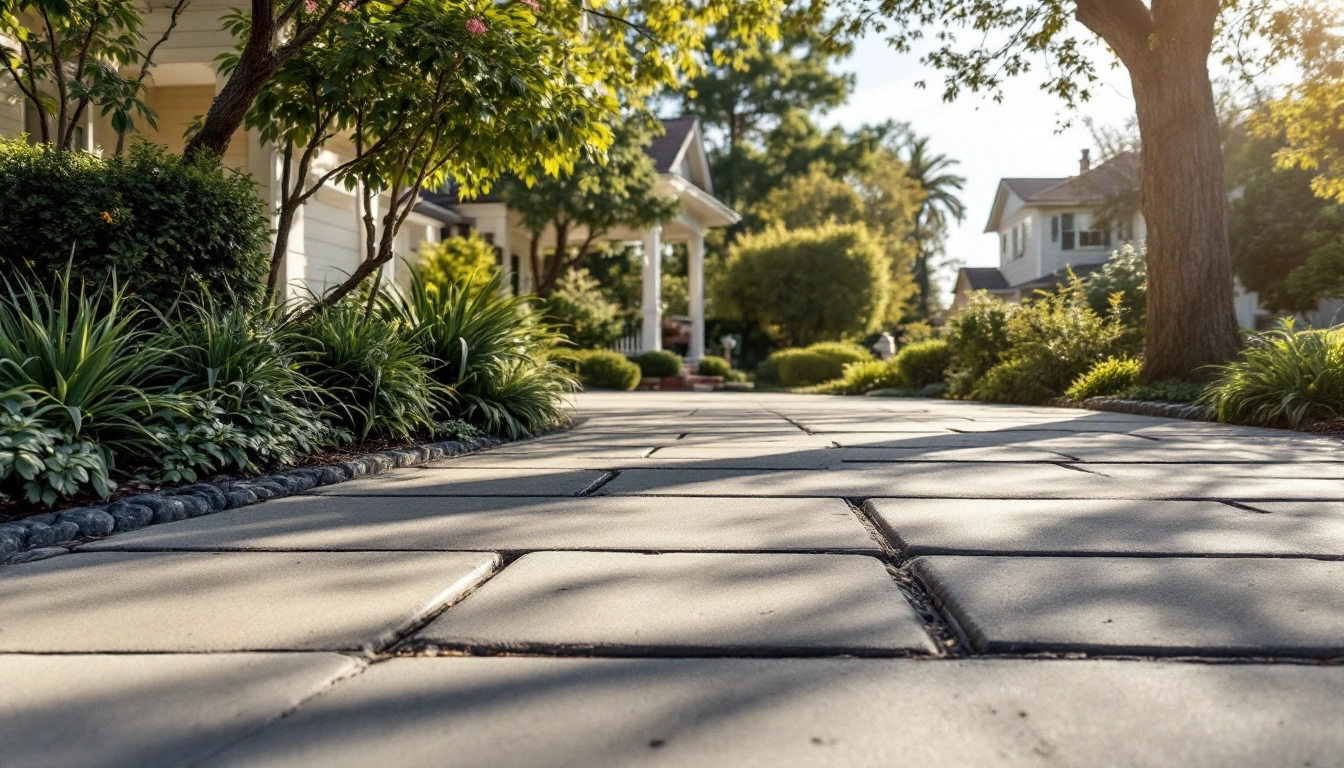
Concrete driveway maintenance inspection
Walk the surface after rain and when dry. Note where water gathers. Take dated photos from the same points to track changes.
Check edges and the garage contact. Photos record appearance; they cannot diagnose hidden support. The driveway guide covers the larger work scope.
Cleaning the installed finish
Use the actual surface and coating instructions. Check the prescribed test area before a new cleaner. Stronger pressure is not automatically better.
Water and joints
Clear debris from the intended water route. That can address a blocked outlet but cannot change a slab low point.
NRMCA CIP 6 explains joint functions. Follow the specified care for joint material. Do not fill every visible line with an arbitrary rigid product.
Coatings and winter exposure
Identify the installed coating before renewal. Gloss cannot name the product. Keep its preparation and application instructions.
NRMCA CIP 2 discusses scaling under relevant exposure. Follow the actual surface's winter-care guidance. A general resealing interval cannot suit every product or condition.
Changing distress
Record widening cracks or new level differences. Ask what causes them before choosing work. NRMCA CIP 4 provides general cracking guidance, not a diagnosis of your slab.
Compare a defined repair with replacement. A cosmetic treatment may leave failed support unchanged.
Follow the instructions for the actual installed products. Their requirements, condition and exposure determine the work; a general maintenance schedule cannot guarantee a lifespan or fixed cost.
FAQ
How often should I seal a driveway?
Follow the actual sealer's instructions and inspect its condition. There is no universal interval here. Keep product details and exposure with the care record. Check compatibility before adding another coating, and do not treat a new coat as proof that underlying support or drainage problems are corrected.
Is pressure washing always suitable?
Check the instructions for the installed finish and coating first. Use the specified method and test area. Stronger pressure is not automatically better, especially on a decorative surface. Keep a record of cleaners already used so repeated treatment does not obscure a changing surface or cause additional distress.
Do cracks mean replacement is needed?
Not every crack has the same cause or effect. Record its location and any change in width or level. Ask for an assessment where needed. Compare repair and replacement by what each will correct, rather than assume that surface appearance alone establishes the condition of the ground below.
Can cleaning fix standing water?
Clearing debris may help a blocked water route. It cannot change the geometry of a low spot in the slab. Record where water gathers and where it should leave. Assess that scope before buying a surface treatment, since water beading on a coating does not prove drainage is resolved.
Verdict on concrete driveway maintenance
Use concrete driveway maintenance to care for the actual finish and track changes. Keep water flow and joints in view. Choose later work from its cause and scope, with product instructions retained. Cleaning or coating should not become a substitute for correcting failed support.