
Stamped concrete
Stamped Concrete Colors
Last updated
Choose stamped concrete colors as a base-and-accent pair. Inspect the sample dry and wet, then check it with the proposed sealer. Pigment mixed into the concrete differs from a surface color hardener or stain. Nearby brick and trim affect how the color looks. Compare it beside the planting too. Keep batch and product records. A later extension or repair may not match the aged surface.
Sections7
Annotated visual records
These schematic drawings explain layout choices. They are not completed jobs, product patterns or construction plans. Diagrams are not to scale; exact stamp dimensions, clearances, joints and water levels need a measured site plan.
Approximate screen colours only. Cured colour varies with the concrete, pigment method, finishing, weather, age and sealer. Inspect a physical sample wet and dry; these are not manufacturer colour matches.
Gray base / charcoal accent
Integral gray base; darker release accent.
A quiet stone-like pairing. Compare the proposed relief dry, wet and with its final coating; darker recesses are only a colour sketch here.
Sand base / walnut accent
Sand color hardener; brown release accent.
A warm base with darker detail. Ask for the exact surface-color and release products; this does not specify a pigment dose.
Terracotta base / umber accent
Integral earth-tone base; umber release accent.
An earth-tone brick-like pairing. Check it next to the actual wall and trim. A later repair may differ from the cured original.
Field, accent and border record
Color hardener and integral color are alternative base methods, not the same process. Release accent highlights texture; a separate border needs its own finish record. The diagram shows locations, not a mixing recipe.
Record the exact stamp set, base and accent methods, border area, true joint layout, coating and sample date with the chosen option. Surface drawings cannot establish wet grip, slab strength or local approval.
Stamped concrete colors come from the base concrete and color treatment. An accent or sealer can affect the result. Pick the full system from a sample.
A screen image can help narrow the choice, but it can't promise the color of a new outdoor slab.
How stamped concrete colors work
Integral color mixes pigment into the concrete. Color hardener adds color at the fresh surface. A release agent or later stain can add an accent.
These methods have different placing steps. A request for “gray stamped concrete” does not tell the installer which method you mean.
The base and secondary color methods in Solomon Colors' stamped-concrete overview describe that manufacturer's finish systems. They do not establish one color result for all concrete mixes; confirm the proposed combination on a sample.
| Method | What to define in the scope |
|---|---|
| Integral pigment | Mix color, dose and batch consistency |
| Color hardener | Surface color and application method |
| Release accent | Proposed accent and cleanup steps |
| Stain | New or existing surface, preparation and test area |
| Sealer | Finish, outdoor use and effect on appearance |
Scroll for more →
Warm, cool and neutral combinations
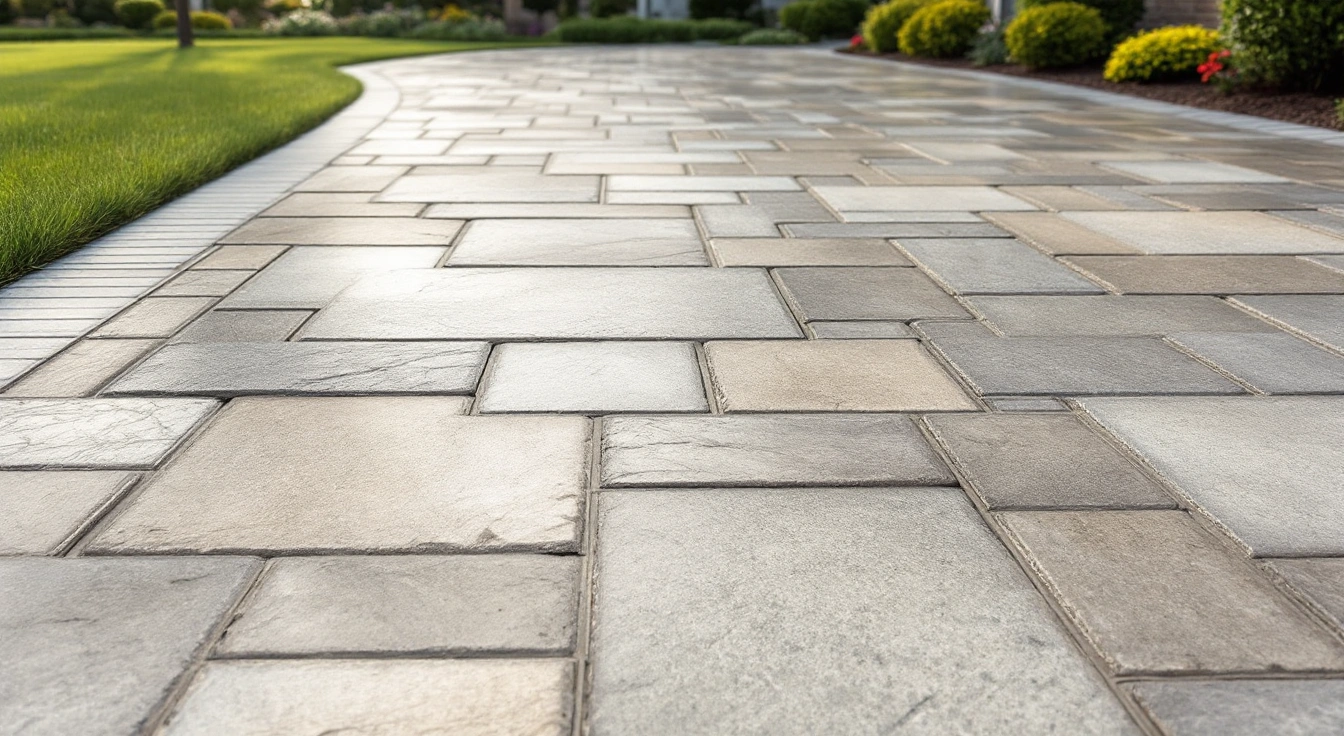
Warm tan and brown can sit beside earth-toned brick or garden beds. Cool gray can sit beside pale trim and dark metal. A plain gray base with a restrained darker accent can suit a stone-like pattern.
These are design options, not tested rankings or promises that one color will suit every house.
Place the sample beside the actual materials. Matching a brick from memory can lead to a poor result. You may prefer a related color rather than a close imitation.
Look at the sample from the doorway and the street as well as from directly above.
Avoid selecting a strong accent only because it makes a small catalog image clear. On a broad slab, dark accents can make the stamp repeat much more obvious. Check a larger sample or a documented example of that exact color system.
Ask how the accent will look after cleanup.
Pattern and border coordination
The same gray can look different on a smooth or stone-like surface. Compare an exposed surface separately. The texture catches light in different ways.
Start with the pattern layout, then choose color. Otherwise, you may approve a color on a texture you won't use.
A dark border gives a clear edge but can also mark every uneven width. Show it on a measured plan. If the border uses another pour, ask how the color and joint between pours will be handled.
A line in the rendering is not the complete installation detail.
Wet, dry and sealed appearance
A damp sample usually looks different from the same dry sample. Sealer may alter gloss and apparent color too. Inspect the proposed finish outdoors in shade and direct light.
Do not use one wet photograph as the final color reference.
Use the base and accent examples in Brickform's color-combination guide to narrow the choices. Confirm the proposed finish on the actual project sample rather than relying on a screen image alone.
Ask whether the sample uses the same sealer as the quote. The answer should include the exact product and finish. A different gloss can make the slab look different even where the color treatment is the same.
Wet traction also needs a separate check; color is not a traction rating.
Fading, cleaning and later work
Retain the color method, batch details and care instructions. Use the approved cleaning method for that surface. A harsh cleaner may affect an accent or sealer.
Avoid treating every stain as a problem that stronger chemicals will solve.
An extension adds a new slab beside an older one. Age, surface wear and sealer can make the join visible. A contrasting border may make that transition deliberate.
It does not guarantee an exact match. Compare a separate color option if matching the old surface would drive the whole design.
FAQ: concrete color
Is integral color the same as stain?
No. Integral pigment is mixed into the concrete before placing. Stain treats the surface and can give a different kind of variation.
The proposed products and surface preparation matter. Put the exact method in the scope so a quote for stain is not mistaken for a quote for colored concrete throughout.
Will the finished slab match the screen image?
A screen image cannot promise an exact match. Lighting and texture affect what you see. Moisture and sealer can alter it too.
Screen settings add another difference. Use images to narrow your choices, then approve a physical sample made with the proposed finish. Keep the sample as an appearance reference.
Do not rely on a screenshot.
Can a new extension match the old color?
It may get close, but an exact match is uncertain. The old slab has aged and its surface may have worn. The original color and product records help.
Compare a contrasting border or separate finish where matching is doubtful. Price any test sample and preparation work in the proposed scope.
Does a darker accent make concrete stronger?
Color alone does not establish slab strength. The mix and placing need their own plan. Curing is a separate decision.
Pick the accent for appearance, then keep the technical specification intact. A darker or more stone-like surface is not evidence that it can carry heavier vehicles or that it needs fewer joints than plain concrete.
Verdict on stamped concrete colors
Select stamped concrete colors from the full finish system. Check a sample beside the house, record the products and allow for later repair differences. The stamped concrete overview explains the whole surface. The cost guide helps you compare a single-color finish with added accents and borders.