
Patios
Concrete Patio Finishes
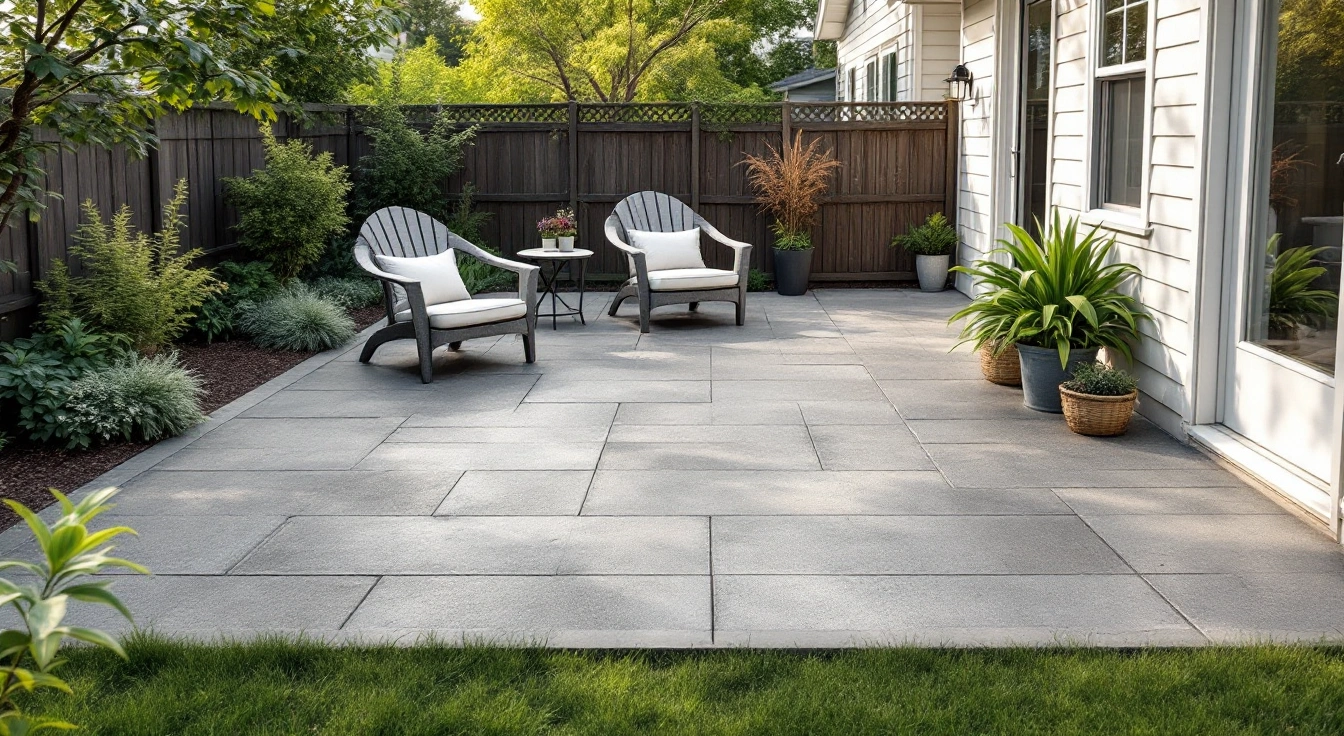
Last updated
Compare the texture and look of the actual surface system. A broom finish differs from stamping or exposing stones. Color and coating are separate choices that can affect the final look. Check the sample in the planned outdoor setting and follow its product instructions. A rough texture or glossy photo does not prove a traction rating. The finish cannot replace suitable support. Keep joints and drainage in view too.
Sections10
Concrete patio finishes change the surface's look and care needs. Choose one from a real sample and the patio's daily use. Keep the slab and water route in view while deciding on texture.
Concrete patio finishes comparison
| Finish direction | What to define | Care or use question |
|---|---|---|
| Plain finished concrete | Exact final texture | Cleaning method for that surface |
| Broom texture | Texture and direction on the sample | Walking comfort and outdoor use |
| Stamped concrete | Stamp set and color system | Coating and later repair appearance |
| Exposed aggregate | Stone blend and degree of exposure | Underfoot feel and debris removal |
| Colored concrete | Integral or surface color method | Product-specific renewal or care |
| Applied treatment | Named product and approved substrate | Compatibility with existing surface |
Scroll for more →
The categories describe choices, not a ranking of every product. View the actual proposed system. Two patios described as “gray textured concrete” can use different methods and coatings.
Start with the patio cost guide to connect the finish with a measured budget. Choose the installed scope before comparing prices. Do not price every finish as plain concrete.
Plain and broom-textured surfaces
A plain patio can suit a restrained look. Specify its final surface rather than leave “plain” open to interpretation. A smooth showroom sample may differ from a surface chosen for outdoor use.
Broom texturing gives another direction for the sample. Discuss the texture with the installer and the people who will use the patio. A photo cannot tell you exactly how a small wheel or bare foot will feel on it.
NRMCA CIP 14 covers concrete flatwork finishing. Timing and the work method matter. Its general guidance is not proof that every finish offered under a familiar name is suitable for your patio.
Keep any coating choice on the sample record. The finished sheen may change the appearance. Ask for product-specific outdoor-use information rather than treating the word “textured” as a complete traction claim.
Stamped texture
Stamped concrete uses a pattern impressed into fresh concrete. It remains a poured slab. A stone-like pattern does not make it a surface of loose stone units.
The stamped patio guide explains scale and layout. Record the stamp set and the proposed color method. Show the pattern at doorways and along curved edges.
Brickform's stamp information shows that named patterns are distinct selections. Use the actual chosen sample rather than assume that every “slate” finish looks the same. Keep product instructions with the final work record.
The slab's real joints still need a plan. A decorative groove may look like a joint while having a different role. Keep both on the layout before approving the pattern.
Exposed aggregate
Exposed aggregate reveals stones at the surface. The blend and degree of exposure affect the result. Choose from a sample of the proposed materials.
Concrete Network's aggregate overview explains the surface process. Do not infer a universal level of roughness from the category name. The sample is more useful for that choice.
Discuss daily use around tables and walking routes. Loose leaves or other debris may interact with surface texture. Ask for the recommended cleaning method without assuming high-pressure washing suits every coating.
For a broader finish comparison, read aggregate vs stamped concrete. Neither appearance decides the slab design below it. Keep support and drainage in the project scope.
Color and sheen
Integral color and an applied surface treatment are different methods. Ask which one the quote includes. A base color plus an accent may require more than one work stage.
Read stamped concrete colors for the sample record. Inspect the color beside the actual house. View it with the proposed coating rather than add gloss only after the color is approved.
Screen images can help narrow a palette. They cannot promise the final outdoor color. Save the approved sample details and note that later patches may still weather differently.
Existing patios and applied treatments
An existing patio needs a surface assessment before a new treatment. Identify old products where possible. A shiny surface cannot reliably identify the coating already present.
Ask whether the proposed product is approved for the actual substrate and use. Record the preparation method. Applying a new layer does not automatically correct moving panels or a failed water route.
Keep restoration and new-pour alternatives separate. A finish-only price can be useful for an existing suitable slab. It should not be compared with a full new installed patio as though both buy the same work.
Joints and water still govern the layout
NRMCA CIP 6 explains joints in concrete slabs. Place the real joint plan beside the finish drawing. Do not ask the installer to hide every functional line only to match a photo.
Use the patio slope worksheet for measured geometry. The finish is not a drainage plan. Keep door contacts and the outlet clear before choosing the pattern direction.
Price the approved sample
Ask for a rate that matches the complete finish system. Check whether it is installed or finish-only. Keep any first coating inclusion visible.
Use stamped patio cost for dated decorative references. If the budget is tight, price a plain field with a limited accent. Keep the same slab and site work on both options.
FAQ
Which concrete patio finish is best?
Choose from the patio's use and a real sample. Plain, broom, stamped and exposed-stone surfaces offer different textures and looks. Check the care plan and the complete installed scope.
No finish category proves the best choice for every user, and the surface should not replace a suitable slab or water route.
Is a broom finish automatically slip resistant?
Do not treat the category name as a verified traction rating. The actual texture and coating matter, along with use and conditions. Ask for the proposed system's relevant information and view the sample.
A rough-looking photo cannot establish how the finished patio performs in every wet or icy situation.
Can I change an existing patio's finish?
Possible options depend on its condition and the proposed product's approved method. Identify the existing coating where possible and get the surface assessed. Keep the preparation scope in the quote.
A new treatment may change appearance, but it cannot automatically correct movement or drainage problems in the underlying patio.
Does a stamped finish replace concrete joints?
No. The poured slab still needs its real joint plan. A decorative groove has a different purpose unless built as the specified joint.
Show functional lines alongside the pattern on the drawing. The approved appearance should account for them rather than rely on a claim that stamping makes cracking impossible.
Verdict on concrete patio finishes
Choose concrete patio finishes from a real sample and the actual use. Record the color and coating method. Keep joints and drainage clear. Then compare quotes for the same complete system. Save its care instructions so later cleaning or renewal fits the surface you selected.